

VA Home Loans in Tennessee & Kentucky: A Guide for Military Families
Got orders to Fort Campbell? Getting out and ready to put[...]
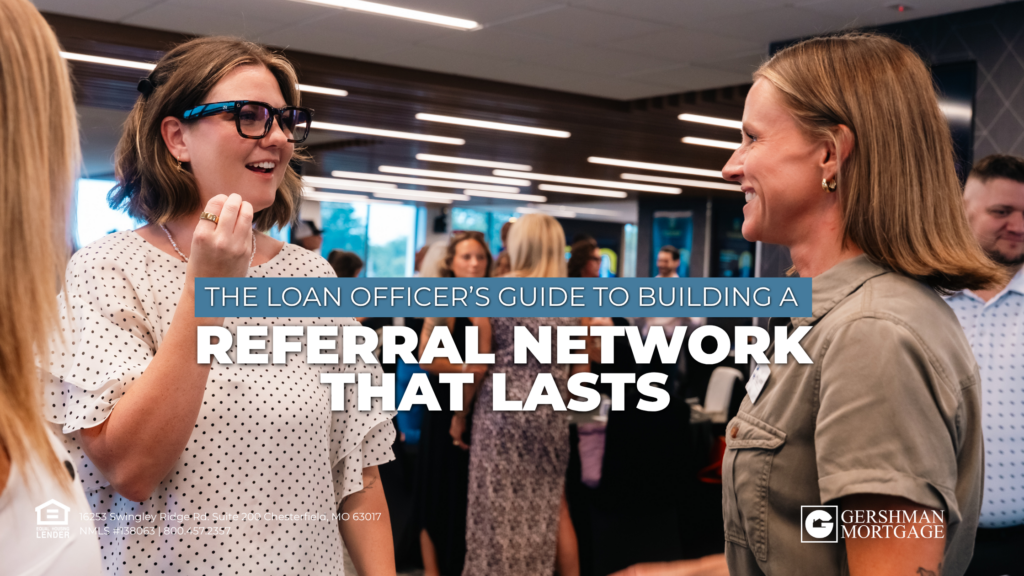
Practical ways to earn more referrals from agents, past clients and local pros, without buying leads.
Most loan officers don’t grow by buying more leads. They grow because a real estate agent, a past client or a financial planner trusts them enough to say, “You should call this person.”
That’s a referral network. And the good news is you can build one on purpose.
At Gershman Mortgage, we’ve been in the relationship business since 1955. Over that time, we’ve learned a lot about what makes people send business your way, and what makes them stop. Here’s what actually works.
A mortgage referral network is the group of people who regularly send you borrowers: real estate agents, past clients, financial advisors, accountants and other local pros. A referred borrower already trusts you before the first call. That’s why referrals tend to close more easily than cold leads.
It’s also steadier than paid leads. When a lead source dries up or gets expensive, your relationships are still there.
A strong network helps you:
NAR’s Profile of Home Buyers and Sellers reports how buyers find their agents – check it out here.
Agents send referrals to loan officers who make them look good to their clients. That means fast answers, clear updates and no surprises at closing.
One coffee meeting won’t do it. The relationship grows over a few deals where you show up and deliver.
Do your homework first. Before you reach out, look at the agent’s recent listings. Mostly first-time buyers? Move-up families in one school district? Open with something that shows you noticed.
Help before you ask. Answer their financing questions, even when there’s no deal on the table. Give them a simple one-pager they can hand to buyers who aren’t sure how much they can afford.
Stay in touch without pitching. A quick text after a closing, a coffee once a month or a heads-up about a loan program change keeps you on their radar. Not every message needs an ask.
Be the lender who keeps everyone posted. Agents hate chasing updates. Tell them where the file stands before they have to ask, and speak up early if something’s off.
When asked if he could start his career over again, and what he would do differently, Justin Berger (Vice President & Branch Manager NMLS #1394663) said attending lunches, one-on-one meetings, Realtor board events, and office visits consistently help establish familiarity and trust – “…be in front of them as much as you can,” Berger stated.
Closing day isn’t the end of the relationship. It’s where the referral part starts.
People who had a good experience want to tell their friends. They just need a reason to remember your name when the moment comes.
Easy ways to stay connected:
Something this simple works: “Hope you’re loving the house! If you or anyone you know ever has questions about buying or refinancing, I’m always happy to help.”
No pressure. Just an open door.
People remember who helped them understand something confusing. And for most buyers, mortgages are confusing.
When you explain things clearly, agents trust you with their clients and borrowers trust you with their friends.
A few ways to do that:
Every helpful post or video is one more place someone can find your name.
Relationships fade when you go quiet. But you don’t need to contact everyone constantly. You need a simple routine you can stick with.
A CRM (customer relationship management software, basically a smart contact list that reminds you who to call) makes this much easier. It tracks your conversations, flags anniversaries and tells you when it’s been too long.
Gershman Mortgage loan officers get CRM and marketing automation tools as part of our support, so the reminders and emails run in the background while you focus on people.
Your personal brand is simply what people think of when they hear your name. Are you the one who’s easy to reach? The one who explains things well? The one who saved a deal at the last minute?
You don’t need to be an influencer. You need to be visible, helpful and consistent.
Post useful stuff. Homebuying tips, local market notes and community events beat generic rate graphics.
Let your personality show. People want to work with someone they feel comfortable calling. Be professional, but be you.
Show up locally. Go to the chamber event, sponsor the youth team and get to know the other pros in town.
Keep your message simple. People should know who you help and how to reach you in about five seconds.
The company behind you matters too. Gershman Mortgage was founded in 1955. A name agents already know can help open doors. Your own service is what keeps them open.
Agents aren’t the only people who hear, “We’re thinking about buying a house.” Plenty of other professionals hear it first.
Think about building relationships with:
The best partnerships are simple. You learn what they do, they learn what you do, and you both send people to the right expert.
Referral relationships come with rules. The Real Estate Settlement Procedures Act (RESPA, the federal law that covers referrals in real estate deals) says you can’t give or accept anything of value in exchange for a referral. In plain terms: you can’t pay for referrals, in cash or in gifts. Follow RESPA, your state’s licensing rules and privacy laws, and check with compliance any time you’re unsure. The CFPB’s RESPA rules are a good place to start.
When an agent or past client refers you, they’re putting their own reputation on the line. If the deal goes sideways, it reflects on them too.
That’s why the service you deliver matters as much as the relationships you build. The basics go a long way:
No loan goes perfectly every time. People forgive bumps when they feel informed. They don’t forgive being left in the dark.
Building a referral network is a long game, so track more than how many people you met this month. Each month, look at:
These numbers show you which relationships are paying off, which ones have gone quiet and where to spend your time.
Just remember that some relationships take a while. An agent who sends nothing for six months might send three deals next spring.
A referral network that lasts comes down to a few habits: stay in touch, be genuinely helpful and deliver on every loan. Do that consistently, and the referrals follow.
If you’re a loan officer looking for more support behind you, we’d love to talk. At Gershman Mortgage, an independent mortgage company, you get marketing help, technology and a team that wants you to win.
Learn more at www.gershman.com and explore our loan officer career opportunities.
Start with three groups: real estate agents, past clients and other local pros like financial advisors and accountants. Stay in touch on a regular schedule, share useful information without always asking for something, and deliver smooth closings. Referrals come from trust, and trust comes from showing up consistently.
Agents refer loan officers who make them look good to their clients. Respond quickly, update agents on every file before they have to ask, and help with their buyers’ financing questions even when there’s no deal yet. Most agent relationships grow over several transactions, not one meeting.
Focus on people who already know you. Stay connected with past clients through anniversary notes and occasional check-ins, partner with local agents and financial pros, and share helpful mortgage education online. Results depend on your market and effort, but these sources tend to bring in borrowers who already trust you.
Referred borrowers show up already trusting you, which usually makes the process smoother and the loan more likely to close. Referrals also cost less than paid leads, and they build on each other. Every happy client and agent partner can send you the next one.
A good starting point: check in with active agent partners every two to four weeks, newer agent relationships about once a month, and past clients a few times a year, plus their home anniversary. Adjust based on what each person prefers. If someone only wants to hear from you when there’s a deal, respect that.
Marketing keeps you visible between deals. Social posts, short videos, email updates and educational articles remind agents and past clients that you’re the go-to person for mortgage questions. Keep it useful, keep it consistent and make sure everything follows advertising and RESPA rules.
Gershman Mortgage gives loan officers marketing support, CRM and marketing automation tools, and operational support, so they can spend more time building relationships. Founded in 1955, Gershman Mortgage is an independently owned mortgage company that underwrites loans in-house and is licensed in 22 states. Loan officers can learn more on the Gershman Mortgage Careers page.
Look at the support you’ll actually get day to day: how fast underwriting moves, what marketing and technology you’ll have, whether leadership is easy to reach, and which loan programs you can offer. The right fit helps you serve borrowers well and makes it easier to keep your referral partners happy.
At Gershman Mortgage, communities, families, and homes are at the heart of what we do. We’ve been doing this since 1955 – over 70 years of helping people finance homes across the Midwest and beyond. We’re independently owned, underwrite loans in-house and are licensed in 22 states. Built on the core values of honesty, integrity, entrepreneurial spirit, and customer-first service, we’re committed to providing an exceptional homebuying experience. Our goal is simple: to exceed expectations and build lifelong relationships.
NMLS #138063 16253 Swingley Ridge Road Suite 200 Chesterfield, MO 63017 (800) 457-2357 Equal Housing Lender. Serving borrowers in: Alabama, Arkansas, Colorado, Florida, Georgia, Illinois, Indiana, Iowa, Kansas, Kentucky, Louisiana, Mississippi, Missouri, Nebraska, North Carolina, North Dakota, Ohio, Oklahoma, South Carolina, Tennessee, Texas, Wisconsin
Got orders to Fort Campbell? Getting out and ready to put[...]

When you’re working with a military buyer, the $0 down payment[...]

If you’ve served, you’ve probably heard the VA home loan is[...]